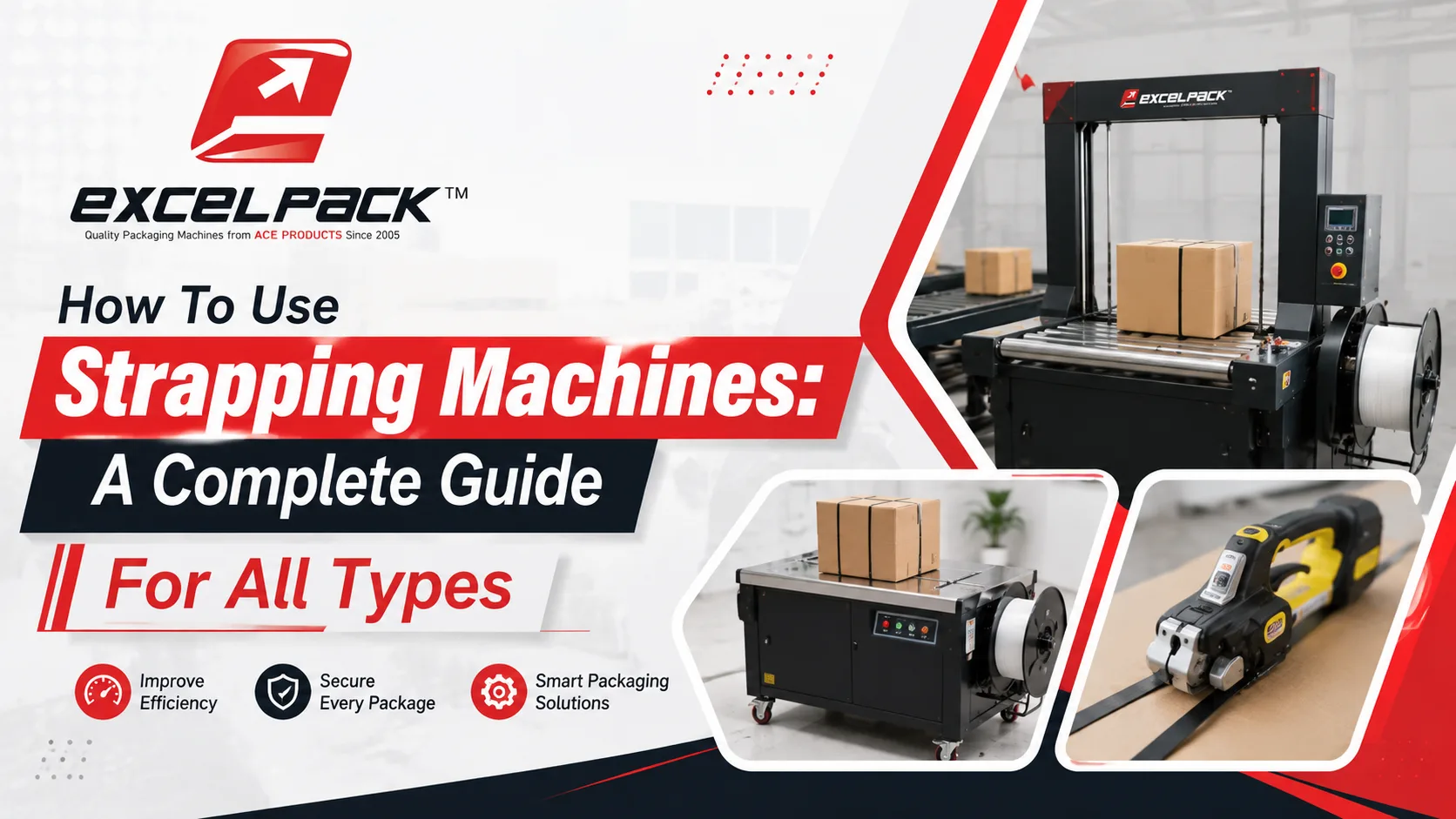
Strapping Machines have become an essential part of modern packaging operations. They help businesses secure cartons, bundles, and palletized loads quickly and efficiently, ensuring products remain safe during transportation and storage. Whether you operate a small warehouse or a large manufacturing facility, understanding how to use a strapping machine correctly can improve productivity, reduce packaging costs, and minimize product damage.
At Ace Packaging, we provide advanced strapping solutions designed to meet the various needs of industries such as logistics, food processing, pharmaceuticals, e-commerce, printing, and manufacturing.
What Is a Strapping Machine?
A strapping machine is a packaging device used to apply plastic or steel straps around products, cartons, or pallets. The machine tightens, seals, and cuts the strap to secure the package firmly. Depending on production requirements, businesses can choose from manual, semi-automatic, automatic, or fully automatic strapping machine models.
The main purpose of strapping is to stabilize products, prevent movement during transit, and improve package handling efficiency.
How To Use A Strapping Machine
The exact operating procedure may vary depending on the machine type, but the basic principles remain similar. Follow these steps for safe and effective operation.
Step 1: Prepare the Machine
Before starting:
- Check power connections.
- Ensure the machine is clean and free from debris.
- Inspect the strap roll for damage.
- Verify that the machine settings match the package requirements.
Always follow the manufacturer’s operating instructions and safety guidelines.
Step 2: Load the Strapping Roll
Most machines use polypropylene (PP) or polyester (PET) straps.
To load the strap:
- Open the strap compartment.
- Place the strap roll correctly on the holder.
- Feed the strap through the designated guide path.
- Ensure the strap follows the machine threading diagram.
- Close the compartment securely.
Proper loading ensures smooth feeding and prevents machine jams.
Step 3: Adjust Strap Tension
Different products require different tension levels.
For example:
- Lightweight cartons require lower tension.
- Heavy packages need higher tension.
- Fragile products require moderate tension to avoid damage.
Most modern machines allow operators to adjust strap tension using a control panel or tension dial.
Step 4: Position the Package
Place the carton, bundle, or product securely on the machine table or conveyor system.
Ensure:
- The package is centered.
- The strap path remains unobstructed.
- The product remains stable during strapping.
Proper positioning improves sealing accuracy and package stability.
Step 5: Begin the Strapping Process
For a semi-automatic machine:
- Wrap the strap around the package manually.
- Insert the strap end into the machine slot.
- The machine automatically tensions, seals, and cuts the strap.
Step 6: Inspect the Finished Package
After strapping:
- Check seal quality.
- Verify strap tension.
- Ensure the strap sits securely around the product.
- Confirm there are no loose ends.
Quality inspection helps prevent packaging failures during shipment.
Also Read : How Does a Shrink Wrapping Machine Work in Modern Packaging Industries?
Safety Tips When Using Strapping Machines
While strapping machines are easy to operate, safety should always remain a priority.
- Wear Protective Equipment: Use gloves and safety glasses when handling straps, especially steel strapping materials.
- Keep Hands Clear: Never place hands near moving machine parts during operation.
- Follow Maintenance Procedures: Regular maintenance reduces downtime and prevents unexpected equipment failures.
- Use Correct Strap Material: Always select strap types compatible with your machine and packaging application.
- Train Operators Properly: Well-trained operators improve productivity and reduce the risk of accidents.
At Ace Packaging, we offer user-friendly machines designed with operator safety and convenience in mind.
Benefits of Using a Fully Automatic Strapping Machine
Many growing businesses are investing in a fully automatic strapping machine due to its efficiency and performance advantages.
- Increased Productivity: Automated operation allows businesses to process large numbers of packages quickly.
- Reduced Labor Costs: Less manual intervention means fewer labor requirements.
- Consistent Packaging Quality: Every package receives uniform strap tension and sealing.
- Improved Workplace Efficiency: Operators can focus on other tasks while the machine handles repetitive strapping work.
- Faster Shipping Operations: Automated systems help businesses meet demanding production and delivery schedules.
Types of Strapping Machines
Before learning the operating process, it is important to understand the different types of machines available.
- Manual Strapping Machine: Manual machines require operators to wrap the strap around the package and use a tensioning tool to tighten and seal the strap.
- Semi-Automatic Strapping Machine: Semi-automatic machines simplify the process by automatically tensioning and sealing the strap once the operator inserts it into the machine.
- Automatic Strapping Machine: These machines automate most of the strapping process and require minimal operator involvement.
- Fully Automatic Strapping Machine: A fully automatic strapping machine performs the entire process automatically without manual feeding of straps. Products move through the machine via conveyors, where strapping occurs at high speed.
Ace Packaging continues to provide reliable strapping machines for businesses of all sizes.
Why Choose Ace Packaging?
Ace Packaging has earned a strong reputation for manufacturing high-quality packaging equipment. We offer dependable strapping solutions tailored to various industries and production environments.
Whether you need a basic semi-automatic unit or a high-speed fully automatic strapping machine, Ace Packaging delivers reliable solutions that improve packaging efficiency and operational performance.
Learning how to use a strapping machine correctly is essential for achieving secure, professional, and cost-effective packaging. By following proper operating procedures, maintaining equipment regularly, and selecting the right machine type, businesses can improve productivity while protecting products during storage and transportation. Ace Packaging continues to provide innovative strapping solutions that help businesses streamline packaging operations and meet growing market demands. From manual systems to advanced fully automatic machines, the right strapping equipment can make a significant difference in packaging quality and efficiency.